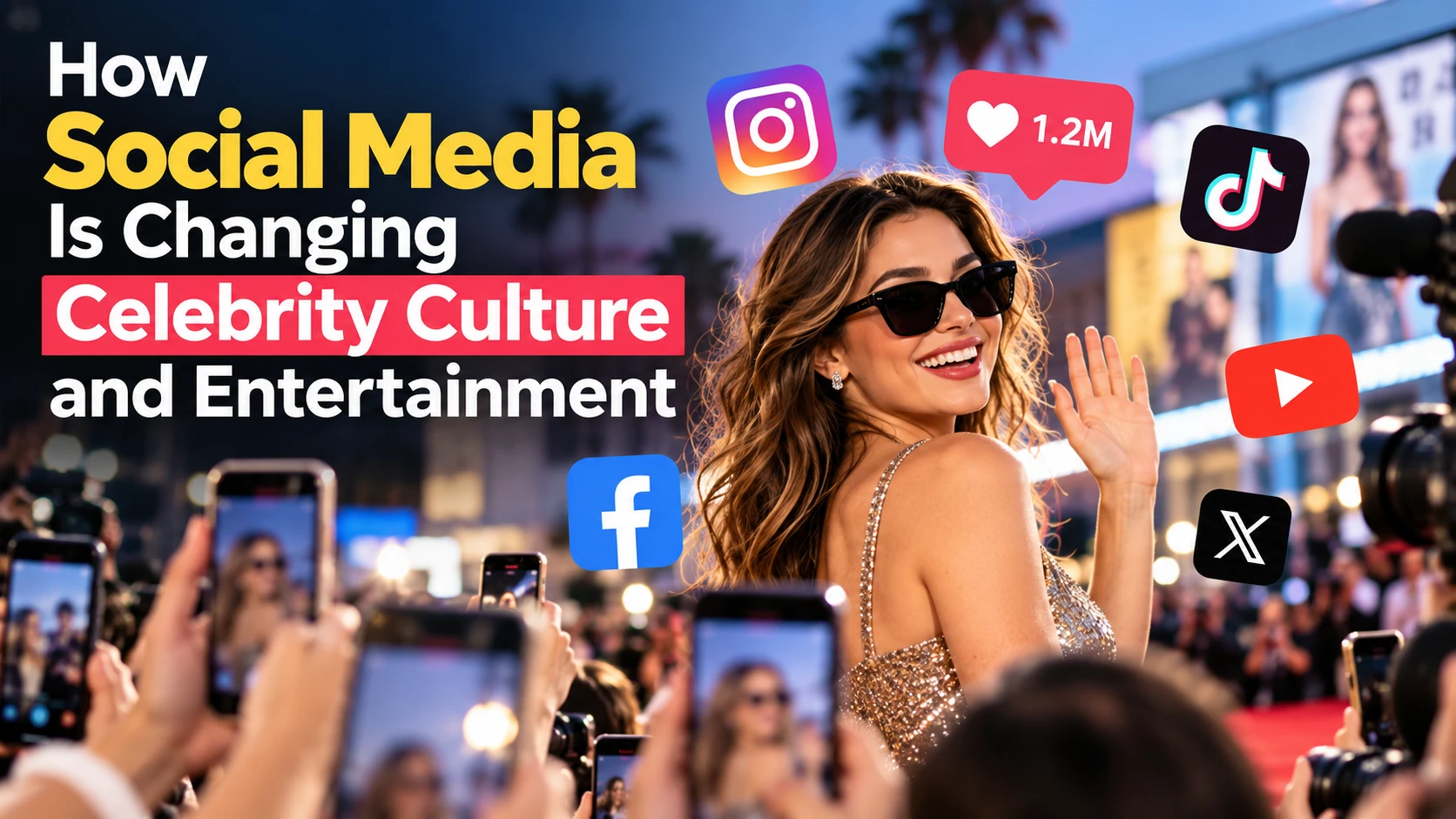
Celebrity culture has existed for generations, but social media has transformed the relationship between public figures and their audiences. In earlier eras, celebrities largely communicated through interviews, television appearances, magazines, newspapers, and professionally produced publicity.
Today, social platforms allow entertainers to communicate directly with millions of followers. This has changed how celebrities build public identities, promote projects, interact with fans, and participate in entertainment culture.
Direct Communication With Audiences
One of the biggest changes is the ability of celebrities to communicate directly with followers.
Actors, musicians, athletes, creators, and other public figures can publish photographs, videos, announcements, livestreams, and personal updates without relying entirely on traditional media organizations.
This can make communication faster and more immediate.
Celebrities Have More Control Over Their Public Image
Social media provides public figures with tools to present selected aspects of their lives and careers.
They can announce projects, share behind-the-scenes content, respond to major events, and highlight charitable or professional activities.
However, social media posts are curated forms of communication. A public profile does not necessarily represent the complete private life of the person behind it.
Fans Can Participate More Directly
Traditional celebrity culture often involved a one-way relationship in which audiences consumed interviews, performances, and magazine coverage.
Social media creates more opportunities for interaction. Fans can comment, share posts, participate in trends, create fan content, and sometimes receive direct responses.
This can make audiences feel more connected to entertainers.
The Rise of Short-Form Entertainment
Short-form video has become an important part of digital entertainment. Celebrities can use brief videos to promote songs, movies, shows, performances, or personal projects.
These formats can make entertainment highly shareable and allow individual moments to spread rapidly.
A short clip, interview segment, dance, joke, or behind-the-scenes moment can attract attention beyond the celebrity’s existing audience.
Social Media Can Influence Music and Movies
Entertainment marketing has increasingly incorporated social platforms. A song can gain attention through user-generated videos, while a movie or television production can become a topic of discussion through clips, memes, interviews, and fan communities.
This creates additional ways for audiences to encounter entertainment outside traditional advertising.
However, online popularity does not necessarily measure the overall quality or long-term cultural importance of a work.
The Growth of Influencer Culture
Social media has also expanded the definition of celebrity. People can develop large audiences without beginning their careers in traditional entertainment industries.
Creators may build careers around comedy, beauty, gaming, fitness, travel, lifestyle, education, or other forms of content.
Some eventually collaborate with established actors, musicians, brands, and entertainment companies, creating greater overlap between influencer culture and traditional celebrity culture.
Fans Can Become Content Creators
Social media audiences are no longer only consumers. Fans can create edits, artwork, reaction videos, reviews, memes, dance performances, commentary, and other content related to celebrities and entertainment.
This user-generated content can contribute to the visibility of a performer or project.
It also means that entertainment conversations can develop independently of official promotional campaigns.
The Speed of Public Attention
Social media operates at a rapid pace. A celebrity announcement or entertainment story can attract significant attention within hours.
The same speed can make it difficult to distinguish confirmed information from speculation. Posts can be reshared widely before their accuracy has been established.
For this reason, audiences may benefit from checking original statements and reliable sources before accepting or spreading claims about public figures.
Privacy and Boundaries
The direct connection between celebrities and audiences can also raise questions about privacy.
Public figures may choose to share aspects of their personal lives, but public visibility does not mean every detail is intended for public discussion.
Social media has blurred some boundaries between professional and personal identities, making responsible audience behavior increasingly important.
Changing Entertainment Marketing
Traditional publicity remains important, but social media has added another layer to entertainment marketing.
Studios, record companies, production teams, publicists, and individual creators can communicate directly with audiences and monitor how people respond to content.
Campaigns can also respond quickly to online trends, although viral attention can be unpredictable.
Final Thoughts
Social media has changed celebrity culture by making communication faster, more direct, and more interactive. Celebrities can build personal brands, promote projects, communicate with fans, and participate in conversations without depending entirely on traditional media.
At the same time, social platforms have created new challenges involving privacy, misinformation, online pressure, and the rapid spread of unverified claims.
Entertainment culture is therefore becoming increasingly participatory. Audiences are not simply watching celebrities and consuming entertainment—they are also discussing, remixing, sharing, and helping shape what receives attention online.